Bilingual Speech and Learning Studio is a centre in Tallinn supporting the development of speech, language, thinking and learning skills. We give special attention to Russian-speaking and bilingual children growing up with both Russian and Estonian.
Classes run individually and in small groups, so a specialist can notice each child's needs. We combine traditional teaching methods with modern digital tools — from speech therapy exercises to the basics of programming.
Before classes begin, we clarify the child's age, the family's language environment and the parents' main goal, so we can offer a suitable program. After that, parents receive clear, regular feedback on their child's progress.
Programs
What we offer
Choose a specialist and format — or send a request and we'll help you decide.
Specialist:
Format:
Ages 2–14
Initial speech diagnostics
Not guessing whether they'll “grow out of it” — understanding what's really happening with your child's speech
We assess speech comprehension, vocabulary, grammar, connected speech, articulation and phonemic hearing — to understand the cause, not just spot a problem.
Understand how your child speaks, understands and learns across several languages at once
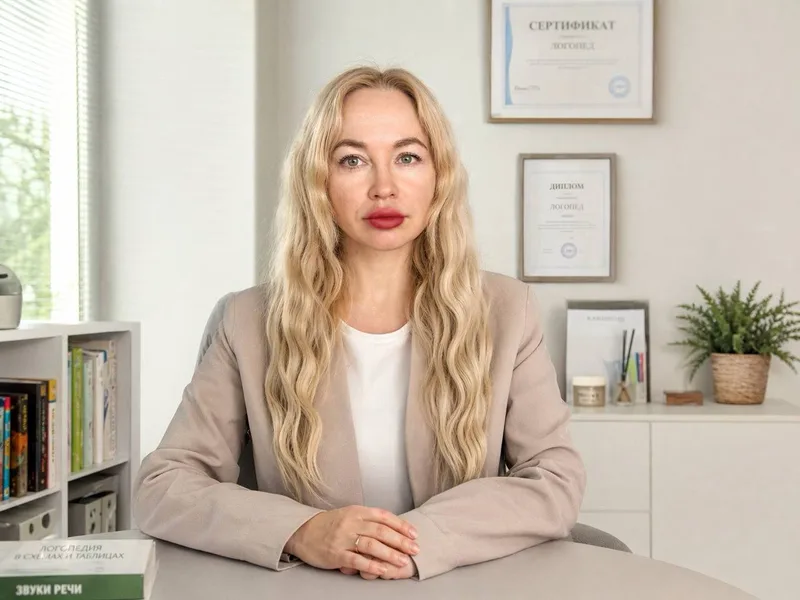
Children growing up with several languages don't always show their difficulties in obvious ways. A comprehensive assessment gives a full picture of a child's speech and language development — two specialists work with the child together: Olga assesses speech development and Russian, Elizaveta assesses Estonian and how the child uses it in learning.
2 specialists
Ages 2–5 — 90 min · €80
Ages 6–14 — up to 120 min · €90
After the assessment you'll understand
which language is currently strongest for the child
how comprehension, vocabulary and sentence-building are developing
exactly where speech or language difficulties appear
whether difficulties relate to the multilingual environment or need separate corrective work
whether the child needs speech therapy
whether extra support with Estonian is needed
how easily the child understands the language used at kindergarten or school
how to support Russian at home
which skills are worth developing first
which follow-up path of classes would help most
Why this matters for a bilingual child
The same child can behave very differently across languages: speaking Russian fluently at home but struggling to answer in Estonian — or understanding everyday Estonian but not school vocabulary. Assessing only one language doesn't always reveal the real cause of the difficulty.
What we assess
speech comprehension
active vocabulary
grammar
sentence and phrase construction
connected speech
retelling
articulation
phonemic awareness
Russian
Estonian
ability to use the language in communication
understanding instructions
for school-age children — the language of instruction and subject vocabulary
English — if the child is already learning or using it
We assess the languages the child actually uses or is learning — not an identical full set for every age. For ages 2–5 the focus is on speech, comprehension and vocabulary in Russian and Estonian. For ages 6–14 this extends to reading, retelling, understanding school instructions and subject vocabulary.
Learning to be a student before the first day of school
In a group, the child learns to listen to instructions alongside others, wait their turn, and work at a shared pace — something individual lessons can't offer.
Pushkin Leningrad State University (St. Petersburg) — Master's degree, "Speech Therapy Work in Education and Healthcare"
Narva College — Bachelor's degree, English teacher qualification
Since 2025 — Institute of Continuing Professional Education (St. Petersburg), Psychology programme
Professional development
Completed training at Marina Samoylenko's Distance Speech Therapy School ("Specialist" and "Pro" modules), plus courses in psycholinguistics, foreign-language teaching methods for children, and modern pedagogical techniques.
Experience
Speech therapist — 3+ years: school, rehabilitation centre, private practice
English teacher — 10+ years: schools, private tutoring
"For me, it's important to first see the child themselves — their strengths, interests and individual traits — before building a plan of corrective work. Through play, movement and engaging tasks, we gradually develop speech, attention and self-confidence.
A good result isn't just a correctly pronounced sound. What matters is that the child finds it easier to communicate and feels confident among peers and adults."
Jelizaveta Kruglova
Educational technology specialist
Specialist in computer science, digital skills, Estonian language and modern educational programs.
Tallinn University — Bachelor's degree (2022–2025)
Currently pursuing a Master's degree at the same university in Educational Technology (Haridustehnoloogia)
Estonian language — level C1
Experience
Teacher — Tallinn Centre for Vocational Education (Tallinna Tööstushariduskeskus)
Currently — Tallinn Technical Gymnasium (Tallinna Tehnikagümnaasium)
"I love the moment when a child realises technology isn't just for games — it's a tool they can actually use, even create with. I try to teach Estonian the same way, not as a lesson, but as a way to feel more confident in everyday life — at kindergarten, at school, with friends.
What matters most to me is that a child isn't afraid to try and get things wrong — whether it's a new Estonian word or their first line of code in Roblox Studio. That's when learning stops being stressful and starts being something they're actually good at."
How classes work
Four simple steps
1
Request
A parent sends a request through the site or contacts the centre directly.
2
Understanding your needs
A specialist clarifies the child's age, language environment and the family's main goal.
3
Diagnostics or introduction
If needed, an initial diagnostic session or short introduction with the child takes place.
4
Classes
The child is offered an individual or group class within a suitable program.
Exact class length, group size and teaching language are confirmed at booking.
Payment terms
How payment works
Each program's price is shown on its card above, in the Programs section. Here are the general payment rules.
Individual sessions
You can start with a single session to see if the teacher and format suit your child. Paying a month in advance lowers the price. Standard session length is 45 minutes; longer sessions can be arranged separately.
Group programs
The regular rate suits families planning consistent attendance. The flexible rate has no long-term commitment but costs a little more.
In-person digital programs
Digital courses follow a separate rule: enrolment is for a fixed term, and each child has a dedicated workstation.
The final price and availability are confirmed at booking.
FAQ
Frequently asked questions
How do I know which class suits my child?
Send a request — a specialist will clarify your child's age and main goal and suggest a suitable program.
Do we need diagnostics first?
Not always. We recommend diagnostics if the goal is unclear or a more precise plan is needed.
How many children are in a group?
Groups are small — the exact size depends on the program and is confirmed at booking.
What language are classes taught in?
Russian, Estonian or English — depending on the program and the family's preference.
Can classes be individual?
Yes, most programs are also available in an individual format.
What age do you accept children from?
From age 2 — the exact age depends on the program, see the program cards above.
What happens if my child misses a class?
Rescheduling and absence rules are confirmed individually at booking.
How do I book a class?
Fill in the booking form below, call, or email us — we'll get in touch.
Can my child attend more than one program?
Yes, children can combine several programs — schedules are agreed in advance.
Are online classes available?
Yes — we offer both in-person classes in Tallinn and online classes. For many programs you can choose the format in the Programs section using the "Online" filter.
 Bilingual Speech